The video states that this vapor cloud holds 140 trillion times the water in all of earth’s oceans AND it contains 4000 times the earth’s oceans. AI or a misinformed human misspoke. If one is accurate, it must be the 140 trillion times the water in all of earth’s ocean.
I know critical thinking is out of fashion, but this is just to see if I’m awake. Today I am.
Yeah, I caught that too.

We are made of that… stuff. The universe looking back at itself.
And, it’s becoming increasingly apparent that consciousness is endemic to the universe, not an emergent property in brains.
On the contrary, microtubules in our brains at a quantum level enable us to receive consciousness. Kinda like a radio receiver.
If we don’t blow ourselves up as a species, as dark as things seem now, there is a potential golden age on the other side.
We are stardust
We are golden
And we’ve got to get ourselves
Back to the garden
It’s us vs. the machine.
Uh-oh…
Uh-oh… ?


I’ve read too much science fiction for that to turn out well.
I remember when Hubble was so cool…
Now it’s like a TRS-80 64k Extended Color Basic computer. 
That was the first computer I ever worked on in seventh grade. I thought it was so cool because we could play Space Invaders once in a while.
I ran Cobal and Fortran programming. This is interesting…
A new study is challenging one of the most basic assumptions in cosmology: that matter is evenly spread throughout the universe.
Astronomers analyzing signals from the early universe – specifically, patterns left over from the Big Bang known as baryon acoustic oscillations – now suggest that Earth and our galaxy may be inside a massive cosmic void, a region 2 billion light-years wide that contains far less matter than average.
This idea isn’t just about empty space. It could help solve one of modern astronomy’s biggest puzzles: the Hubble tension – a mismatch between two ways of measuring how fast the universe is expanding. One method, looking at the early universe, gives a slower rate than another method, which focuses on the nearby universe.
If we really are inside a vast underdense region, that could make the local universe expand slightly faster – without needing to change the laws of physics or toss out dark energy.
Researchers say it’s now 100 times more likely that we live in a cosmic void than in a region of average density. If confirmed, this would dramatically change how we understand the structure of the universe – and our place in it.
Learn more: https://ras.ac.uk/…/earth-inside-huge-void-sound-big…
Or 20,000 Milky Way galaxies laid end to end. Luckily, we are only in existence cosmically equivalent to the length it takes a flea fart to disperse in a hurricane. It would be interesting to see the cosmic ramifications, if any, for this phenomenon.
“By considering all available BAO measurements over the last 20 years, we showed that a void model is about one hundred million times more likely than a void-free model…”

Hubble>Webb>?
When will the PS3 be released?
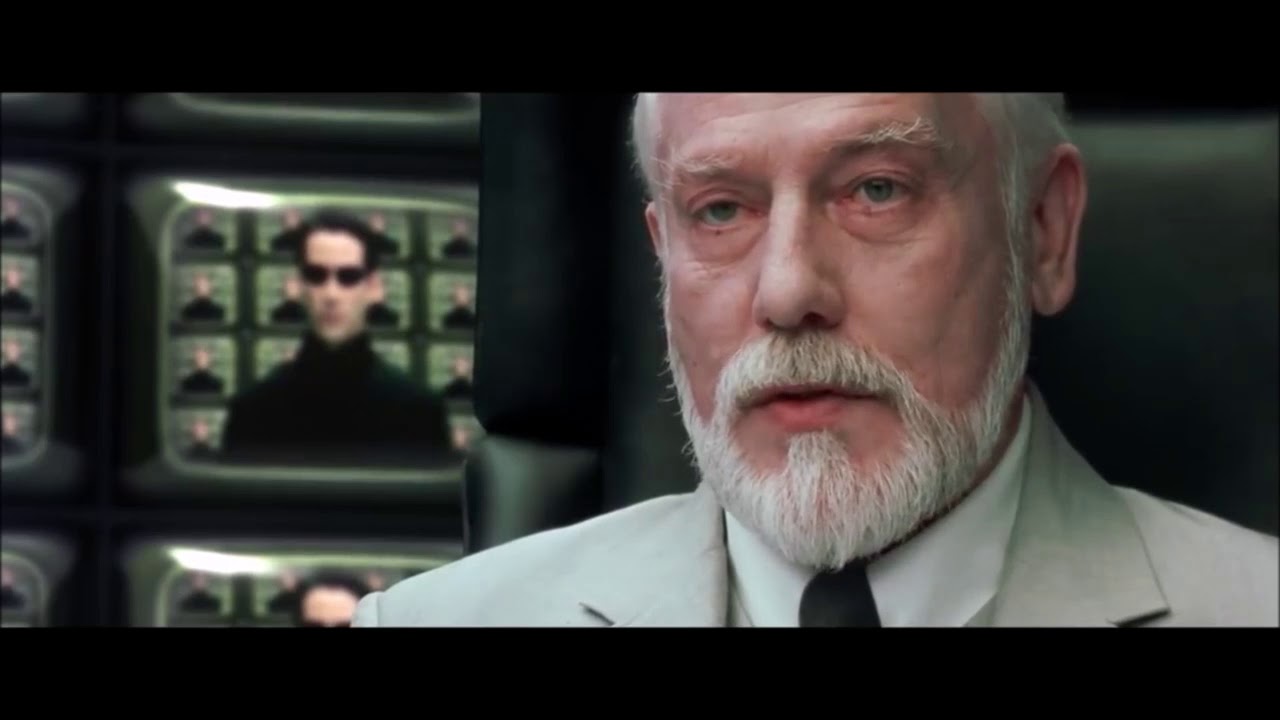
Or, this version of the Matrix isnt self correcting fast enough and we are finding anomalies
Ever read “Slaughterhouse-5”? Billy Pilgrim states that he “will die, have died, and always will die on February 13, 1976.”