ATREMIS 2 IS IN POSITION! About 3 weeks to go
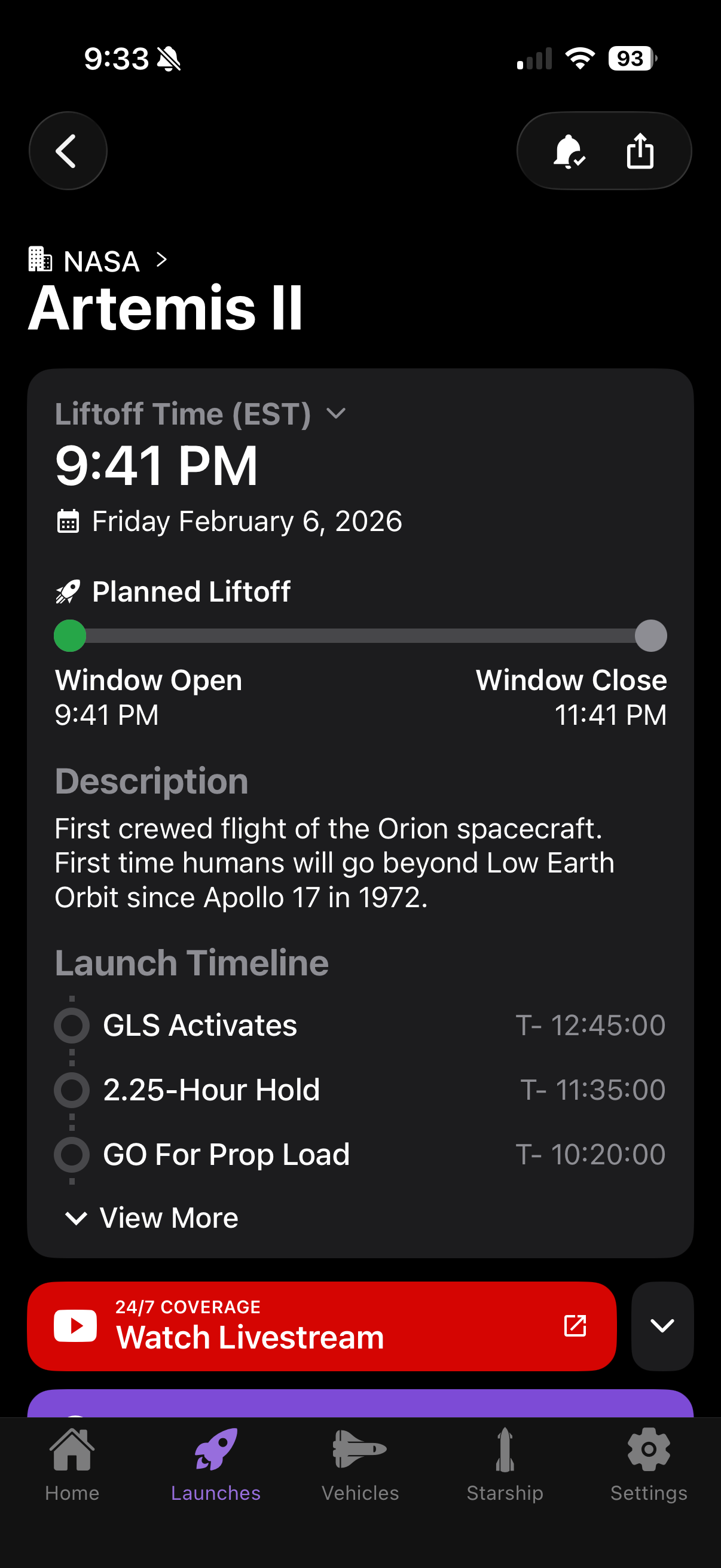
Will be the first time humans orbited the Moon since December 1972.
ATREMIS 2 IS IN POSITION! About 3 weeks to go
Will be the first time humans orbited the Moon since December 1972.
That’s where all the alien cities are.
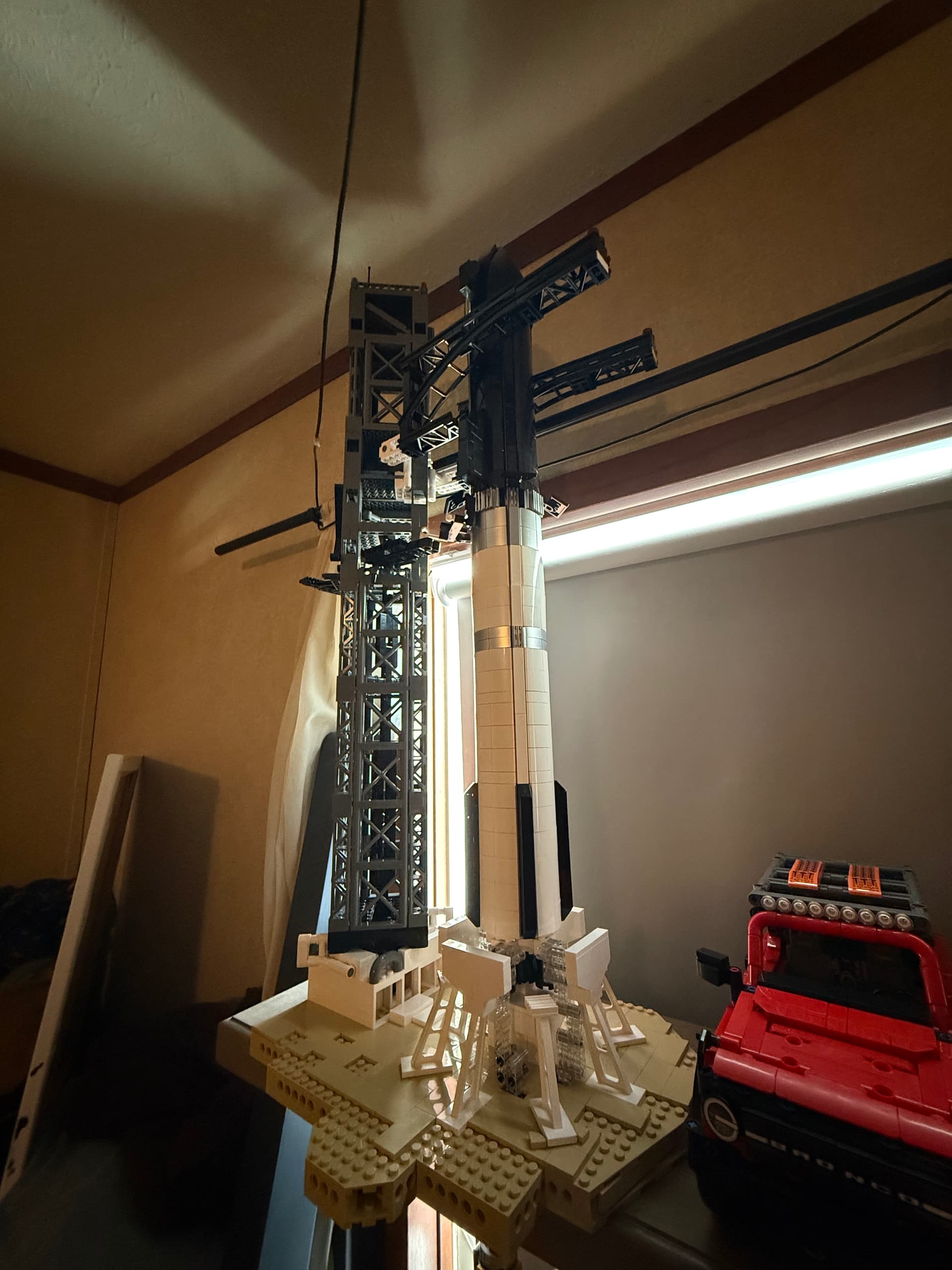
That is the biggest dildo I have ever seen. It needs its own special stand just to hold it up.
Have fun my friend.
Nerds gonna nerd
The stand was an add on. Without the stand it was only like $80 with like $110.
Nearly 2,000 pieces.
3rd party “Legos” are so much better than official brand.
Niiiiice
So listening to a podcast on the upcoming artimis mission.
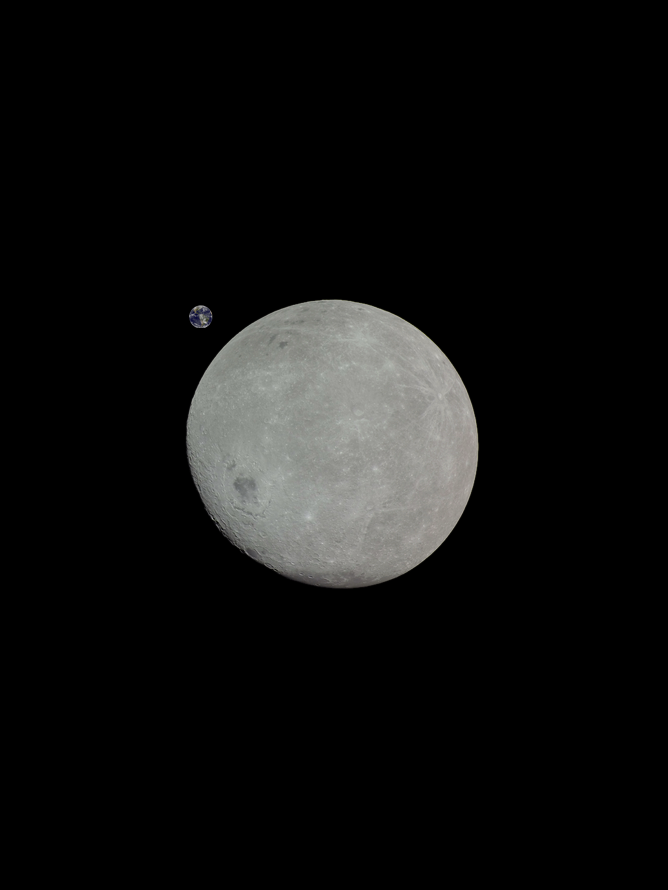
This is what the view should look like for the astronauts
Hope we get a good picture
Moon will be roughly 28.5 degrees of view.
Earth will be roughly 1.9 degrees
So the Moon will appear,15x larger than earth most cameras are 80 degrees or so.
So in my scale photo the moon would be about 35% of the photo. Earth would be 2.5%
Canada is taking a historic leap into the future of communication by connecting cities through a quantum-entangled internet, a network designed to be fundamentally immune to hacking by any existing digital system. Unlike traditional internet infrastructure that relies on classical data transmission, this revolutionary network uses the laws of quantum physics, where information is encoded in quantum states that cannot be copied, intercepted, or altered without detection.
At the heart of this technology is quantum entanglement, a phenomenon Albert Einstein once called “spooky action at a distance.” When two particles are entangled, any change to one instantly affects the other, no matter how far apart they are. In a quantum internet, this property allows information to be shared with absolute security. If a hacker attempts to intercept the data, the quantum state collapses immediately, alerting the system and rendering the stolen information useless.
Canada’s quantum network is expected to transform sectors that depend on ultra-secure communication. Banking systems, government operations, healthcare records, and national defense could all operate with a level of security that current encryption methods cannot match. As cyberattacks grow more sophisticated worldwide, this breakthrough offers a solution that doesn’t just resist hacking, but makes it physically impossible under the laws of nature.
Beyond security, this technology lays the foundation for future quantum computing networks, enabling faster scientific simulations, medical research, and complex problem-solving that today’s computers struggle to achieve. By linking cities with quantum infrastructure now, Canada is positioning itself as a global leader in next-generation internet technology.
This achievement signals a shift from defending against cyber threats to eliminating them entirely. It’s not just a faster or better internet—it’s a completely new way of thinking about trust, privacy, and digital communication in the modern world.
Internet needs fundamentally changed. The foundation of it is way outdated
Switching to IVP6 would be a massive upgrade
People wondering why its taking so long to get back to the moon.
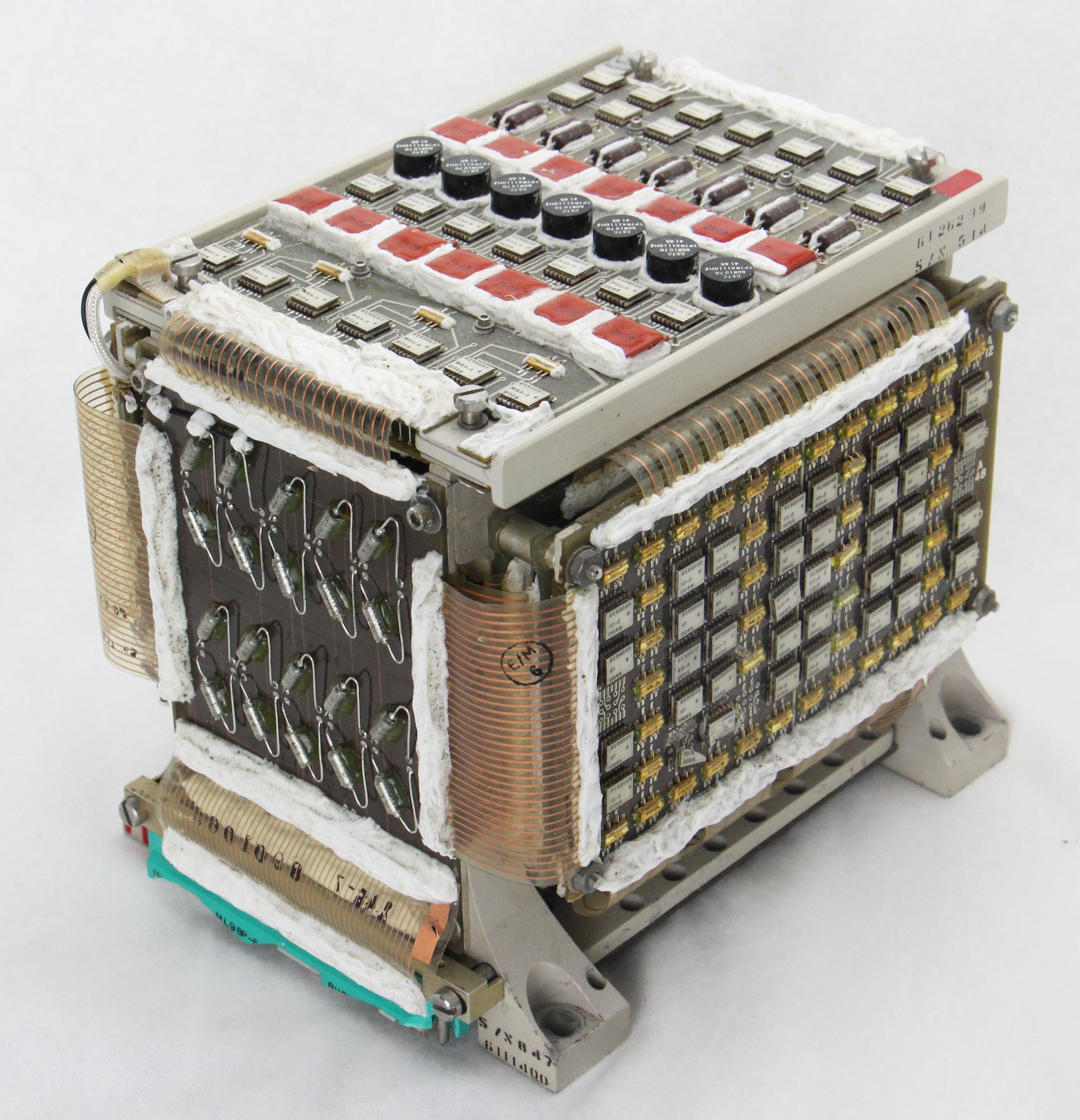
This was the computer on the Apallo mission
Used PHYSICAL memory.
~2kb of ram and 70kb of storage.
A new apple watch has 1GB of ram and 32GB of storage. 500,000x as powerful
Them fly boys were doing it from the seat of their pants.
That’s not enough storage to scan and save one granny nipple. @Bols never would’ve made it.
crazy right? the moon is actually SO FAR AWAY it’s nuts.
NDT had a bit asking people where they would put the moon compared to a globe he was using as illustration. the moon is about as wide as the US and it was the appropriate scale. one person put it a couple feet away, the other put it maybe 4 feet away.
Neil said it would actually be 30 feet away.
I wish wish wish time machines were a real thing, just to observe. it’d be fascinating to go back and see dinosaurs and then look in the night sky and see the stars (contellations would look vasty different) but also how big the moon would be in the sky.
(and then I look and see it’d be like 1500-2000 miles closer, not much at all, if the speed at which it’s moving away was constant, which I don’t think it was)
Thats really not a major difference.
Considering the moon already moves about 27,000 miles in and out
that’s what she said.
wait that doesn’t work.
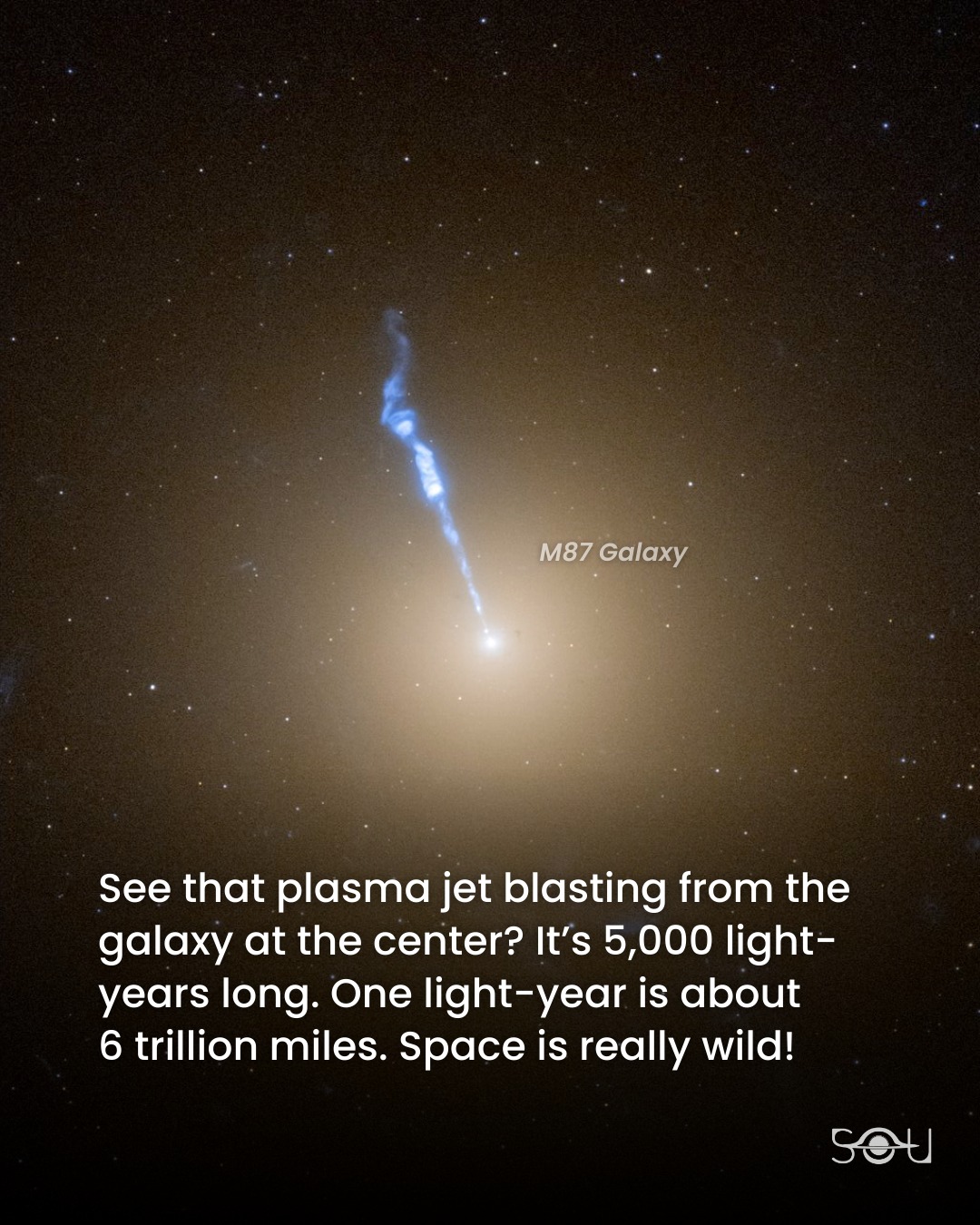
From the heart of the giant elliptical galaxy Messier 87 erupts one of the most dramatic structures in the known universe: a narrow, blazing jet of plasma stretching nearly 5,000 light-years into space.
At its source lies a supermassive black hole billions of times heavier than the Sun, quietly pulling in surrounding gas while unleashing extraordinary power.
As matter spirals toward the black hole, intense magnetic fields twist and channel some of it away from the galaxy’s core at near-light speed. The result is a luminous jet, visible across radio, optical, and X-ray wavelengths, cutting cleanly through intergalactic space like a cosmic searchlight. Knots and shocks ripple along its length, marking regions where the flow collides with surrounding material or suddenly changes speed.
What makes M87’s jet especially remarkable is its proximity. At just 55 million light-years away, it offers astronomers a rare close-up view of how black holes shape their environments. Observations over decades have shown that this jet is not static but alive—brightening, shifting, and evolving over time.
Far from being mere cosmic fireworks, the jet plays a vital role in regulating star formation in the galaxy, heating surrounding gas and influencing M87’s long-term evolution.
The first of 3 segments of this video deals with super massive black holes in the very early universe, with wonder as to how this could have happened:
Julian Gough takes a victory lap on October 29th because he predicted these supermassive blackholes before any James Webb Telescope images were received. Here’s a quote at the end of the much larger linked article below:
" Let’s end with last month’s article in Quanta, scrambling to explain a recently discovered “naked” supermassive black hole, in the early universe, that doesn’t seem to have a galaxy around it yet.
“This new black hole, which is as heavy as 50 million suns and is dubbed QSO1, clashes with the old, provisional account of the galaxy formation process, which did not start with black holes. Black holes were thought to have come along only after a galaxy’s stars gravitationally collapsed into black holes that then merged and grew. But Maiolino and his colleagues described a solitary leviathan with no parent galaxy in sight.
The question now is how this black hole came to exist.”–Quanta Magazine, “A Single, ‘Naked’ Black Hole Rewrites the History of the Universe” , by Charlie Wood, September 12th 2025.
Obviously, I think I know the answer. (Having predicted exactly what they are seeing now back in 2022.)
It is amusing to see that, three years into the new James Webb Space Telescope era – after three years of discovering ever-greater domination of galaxy formation by ever-larger, ever-earlier supermassive black holes – so many cosmologists, astronomers, and science journalists remain oblivious to the fact that there is a perfectly respectable and conservative theory that predicted all this…"
Here is Julian Gough’s prediction post of July 2022:
(5) Predictions! What the James Webb Space Telescope will see (and not see)…

I had no idea about that lidar satellite “LISA” thats what im excited for. More Super Massive Black holes.
And the dark matter. Aka Einsteins biggest blunder. The unknown constant. That sounds like we are no closer to figure out