James Webb telescope

New VIDEO from the M87 blackhole.

So a few years ago you may remember they took a photo of this massive black hole. Now they have a time lapse video.

I know realize this is a bit old . However still fascinating.

So the blackhole in the middle of the Virgo galaxy.

Its absolutely massive. The plasma rings are WIDER than our solar system. And are moving at near lightspeed.

The plasma jet shooting from its poles are over 5,000 lightyears in length!

Thats my biggest doomsday fear. A nearby star going supernova turning into a black hole, shooting plasma at the earth instantly vaporizing our atmosphere like a giant nuke

1 Like

Cool stuff.

The old Google machine says your fears don’t have much of a chance of coming true based on the Stellar neighborhood and limiting the time frame to tens of thousands of years

1 Like

dance image GIF

2 Likes

🆕 Our ESA/Webb Picture of the Month features a treasure chest filled with stars! 💎

🔴 This fantastical scene is from the Carina Nebula, which lies just 7500 light-years away in the constellation Carina (the Keel). The nebula is home to an incredible collection of objects, including this one: The Treasure Chest.

🔴 Cometary globules are isolated clouds of gas and dust which often resemble comets, but the Treasure Chest looks more like… well… a treasure chest. It is being shaped by radiation and winds 🌬️ from a nearby star system (outside this image).

🔴 It contains a cluster of young stars, which produce the otherworldly glow coming from within the Treasure Chest, revealed by the #NIRCam on the NASA/ESA/CSA James Webb Space Telescope.

1 Like

that’s a galactic pinball machine

2 Likes

I was a pinball addict for years. We owned the pinball machines and pool table where I worked but not the PacMan’s, etc, we owned what we could work on. That’s a great call, it does look like a Pinball machine. I’d open up free pool and pinball on Sat afternoons in the summer to get people in the bar, it was slow and I got really good at both. Great memories.

3 Likes

Astronomers discover black hole star for the first time ever

The black hole star is located just a few hundred million years after the Big Bang.

By Raymond Sanchez

THE TAKEAWAY

  • Astronomers at MIT have discovered a black hole star for the first time.

  • It’s an extremely bright red spot in the early universe.

  • Scientists made the discovery while searching for the most distant and earliest galaxies.

Astronomers are fascinated by the recent, never-before-seen discovery of a black hole star.

While searching for the most distant and earliest galaxies, astronomers at MIT spotted a black hole star, which is an extremely bright red spot in the early universe, while conducting observations using NASA’s James Webb Telescope.

The black hole star is located just a few hundred million years after the Big Bang.

According to experts at MIT, this is likely a combination of a black hole and a star, something that has never been observed until now.
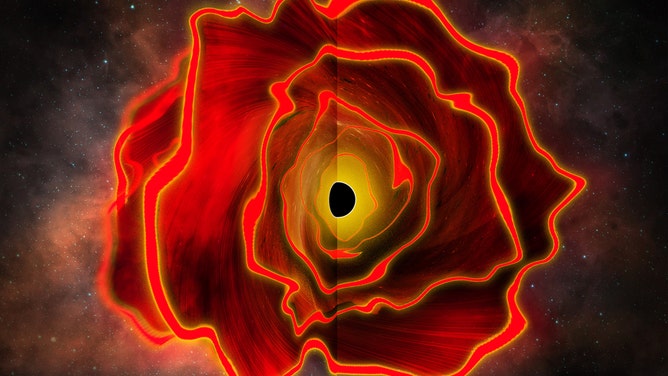
Black hole star.

Black hole star.

This phenomenon is likely a huge, dense cloud of gas powered by a central black hole, not standard nuclear fusion.

"The object resembles an enormous star, spanning the size of our solar system, Jennifer Chu from MIT News said. “But it is also putting out 100 billion times more energy than any known star can physically produce. In fact, such energies are closer to what a black hole might generate.”

These little red dots, which often appear throughout space, seem to be everywhere in the early universe, but disappear closer to the present day.

Experts hypothesize that these red dots could be powerful energy sources surrounded by a cocoon of hydrogen, such as young, rapidly growing black holes.
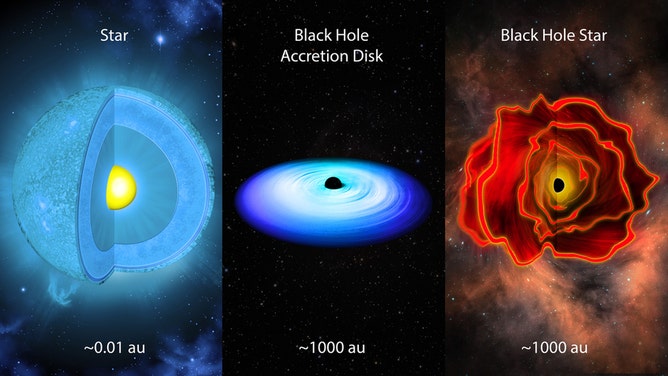
Different kinds of stars.

Different kinds of stars.

Additionally, they noted that the extremely bright red dot disappeared below certain wavelengths.

This drop-off in light is known as the Balmer break, a signature associated with dense gas soaking up photons in the atmospheres of stars a few hundred years old.

Normally, a Balmer break indicates a population of stars, but this one is too strong.

“You have something that looks a bit like a star but is 100 billion times brighter,” Rohan Naidu, a NASA Hubble Fellow and Pappalardo Fellow at MIT’s Kavli Institute for Astrophysics and Space Research, said. “That means you can’t be powering this by nuclear fusion, which is the energy source that sits at the heart of all the stars we have.”

This artist’s impression shows the record-breaking quasar J059-4351, the bright core of a distant galaxy that is powered by a supermassive black hole. Using ESO’s Very Large Telescope (VLT) in Chile, this quasar has been found to be the most luminous object known in the Universe to date.

This artist’s impression shows the record-breaking quasar J059-4351, the bright core of a distant galaxy that is powered by a supermassive black hole. Using ESO’s Very Large Telescope (VLT) in Chile, this quasar has been found to be the most luminous object known in the Universe to date. (Credit: ESO/M. Kornmesser)

Because of this confusion, experts ran simulations to see which scenarios and combinations of astrophysical features could have produced this distinctly bright color.

As a result, they concluded that these red dots are black hole stars, each containing a central black hole 100,000 times the mass of the sun.

This first-time discovery can help experts piece together why this phenomenon dissipates closer to the present day and learn how these celestial wonders form so quickly, along with the secrets they hold.

2 Likes

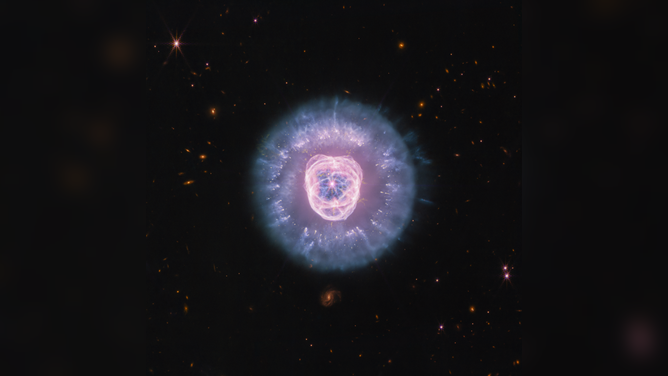
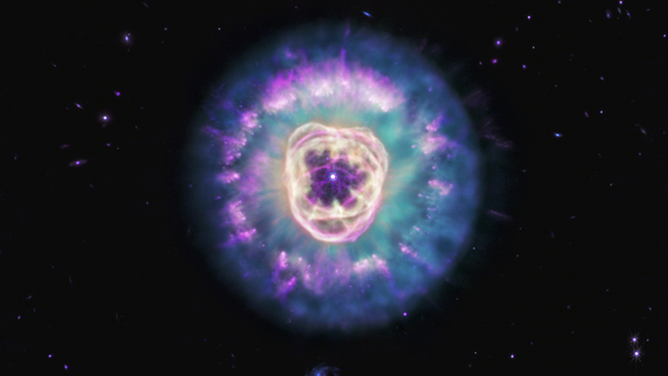
Lion Nebula roars into view as telescope captures dying star in breathtaking new detail

While exploring deep space using NASA’s James Webb Telescope, experts were able to capture stunning new images of NGC 2392, otherwise known as the Lion Nebula.

By Raymond Sanchez

NASA’s Hubble Telescope captures stunning images of the Trifid Nebula in deep space, nearly 5,000 light-years away from Earth.

THE TAKEAWAY

  • NASA’s James Webb Telescope captures new images of the Lion Nebula.

  • Scientists expect the nebula to disperse in about 10,000 years.

  • Within the “mane” of the nebula are hazy comet-shaped objects.

Space lovers and skywatchers alike can rejoice in more celestial news as experts at NASA share astonishing images of the Lion Nebula roaring with life.

While exploring deep space using NASA’s James Webb Telescope, experts were able to capture stunning new images of NGC 2392, otherwise known as the Lion Nebula.

William Herschel first discovered it in 1787, and it began forming about 10,000 years ago, when the dying star began throwing material into space.

A nebula is a giant cloud of dust and gas in space.

NASA’s James Webb Space Telescope imaged the planetary nebula NGC 2392, the Lion Nebula.

NASA’s James Webb Space Telescope imaged the planetary nebula NGC 2392, the Lion Nebula.

According to NASA, some nebulae come from the gas and dust thrown out by the explosion of dying stars, such as a supernova.

Images shared by NASA show the nebula dazzling in deep space, exuding purple, blue, pink and white colors from the outer layer of the lion-face-shaped figure.

Within the “mane” of the nebula are hazy comet-shaped objects.

Massive stars undergo supernova explosions at the end of their lives.

NASA’s James Webb Space Telescope’s mid-infrared image of planetary nebula NGC 2392.

NASA’s James Webb Space Telescope’s mid-infrared image of planetary nebula NGC 2392.

“When a lower-mass star can no longer sustain itself with nuclear reactions in its core, the star becomes unstable and pulsates, losing its mass by shedding its outer layers, which then turn into shells of gas and dust called a planetary nebula,” NASA said.

Once the star’s radiation drives the ejected material away, it leaves behind a very hot core known as the white dwarf in the center of the phenomenon.

As the dying star sheds its outer layers, the nebula forms a bubble of ionized gas that creates the lion’s face and expands over time, producing the picturesque image.

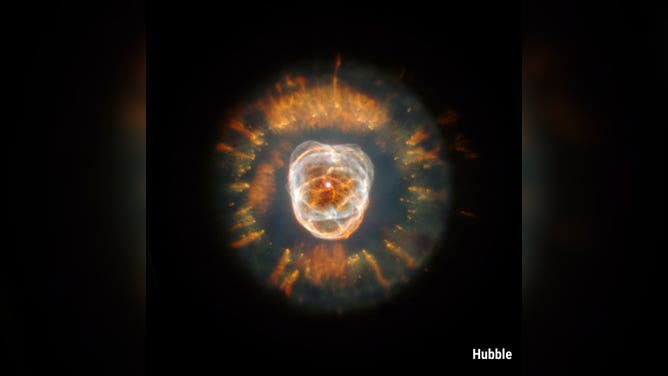
Less clear view of the Lion Nebula from the Hubble Space Telescope.

Less clear view of the Lion Nebula from the Hubble Space Telescope.

(@NASAHubble / X)

Scientists expect the nebula to disperse in about 10,000 years, which is a relatively short period in astronomical terms.

The closest nebula to Earth is the Helix Nebula, located about 700 light-years away.

3 Likes

For those of you following Julian Gough and his ideas about cosmological natural selection, he has apparently just moved to California and is now working with a larger group to advance this area of research. And there is a new write up about him and the stuff in the Smithsonian:

3 Likes

can you imagine being in a system nearby and looking up at this in the night sky? We’re in a relatively boring part of the galaxy which is a shame.

1 Like

Countdown…

2 Likes

Here we go…

NASA’s Nancy Grace Roman Space Telescope officially launched into space yesterday, riding on a SpaceX Falcon Heavy rocket — and now it’s flying on its own, all by itself in space.

It has already passed the Moon, and its solar panels and sunshade have opened up successfully. It’s sending signals back to NASA the whole way.

But Roman isn’t ready to take photos yet. It still has a 3-month journey ahead before it reaches its final spot in space, about a million miles from Earth. Once it gets there, a special shield will block light and heat from the Sun, Earth, and Moon — keeping it cool and steady so it can see deep into space clearly.

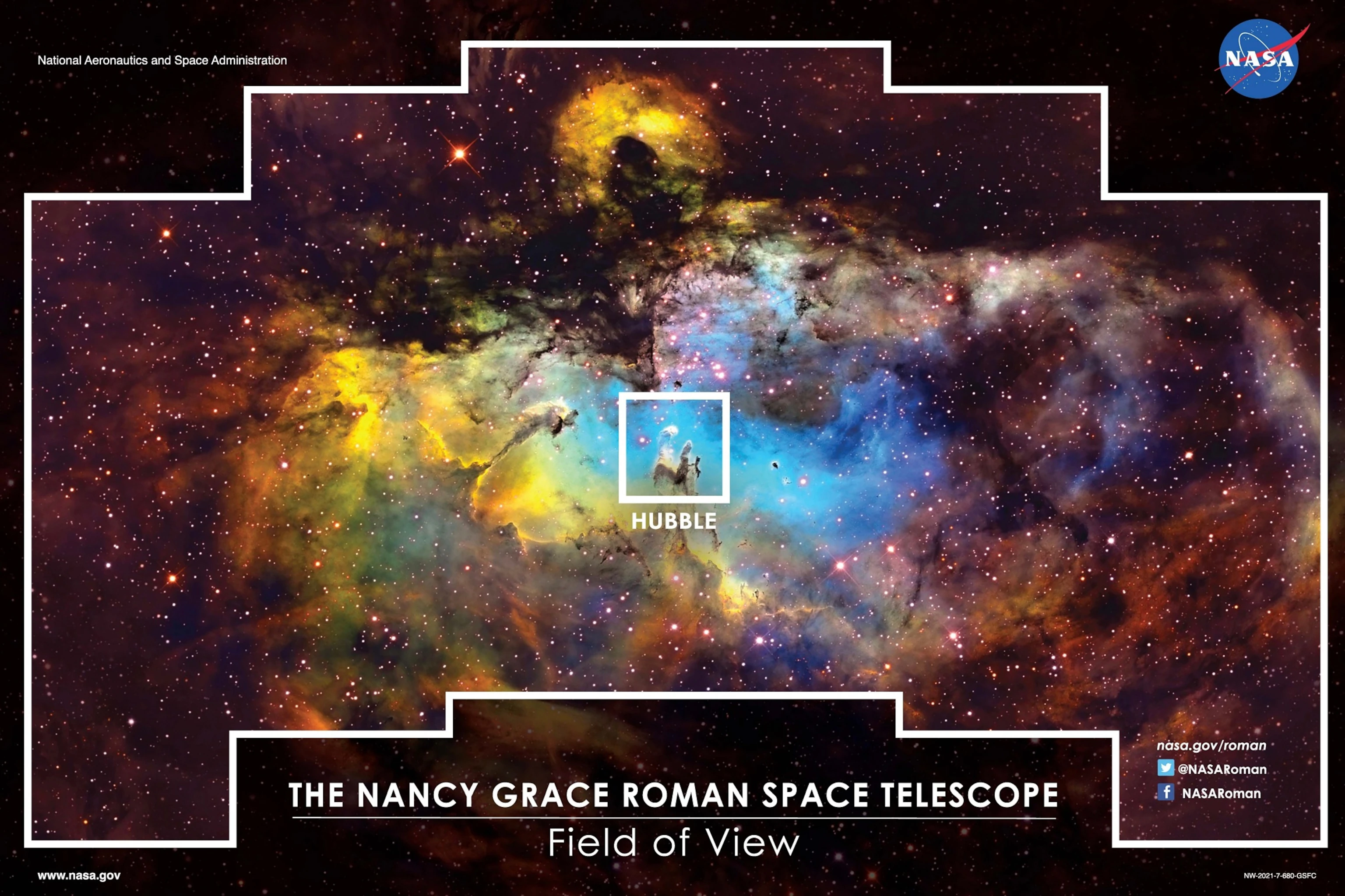
When it’s finally ready, Roman will be able to see 100 times more sky than Hubble in a single picture, even though its mirror is the same size.

For now, it’s just quietly flying through space… getting closer every day to changing what we know about the universe

4 Likes

I cant wait to see how much gets done.

The NGR wont see more in terms of quality vs hubble. A little clearer just with better sensors and faster computers. But it can just take bigger pictures.

So the resolution of both photos will be same just more!

Allowing for more research to be done. Because the waiting list for Hubble is massive and its at end of life

3 Likes

This means that the James Webb Telescope thread should last far beyond my lifetime, much like my yearnings for Lions to finally win a Super Bowl.

3 Likes

The Hubble is near the end of its life cycle? They don’t make space telescopes like they did in the 50s…

1 Like

Yea Hubble will eventually fall into the atmosphere in roughly 10-13 years. Theres currently no plans to push it back into further orbit like they did when they made the repairs 20 years ago with the shuttle program.

but with this new Telescope. It virtually makes Hubble obsolete. I mean NGR can do more in a week than Hubble can in a year

1 Like

The Roman Space Telescope.

We don’t call it to Edwin Powell Hubble Telescope, right?

RST. Please.

it’s insane to me that hubble or the voyagers still function as good as they do.

2 Likes
1 Like

And think of the aliens. They might well think we’re naming telescopes after mass murderers.

1 Like