Yikes man, sounds terrifying, glad you’re doing OK! Also sounds like your body may be telling you the days of running yourself ragged with no consequences might be over. As my 99yo grandmother used to say, Getting old sucks. (To which I’d reply: The alternative isn’t great either.)
2 Likes
Todo Bien hoy,
Space, the final frontier…
1 Like
The “forbidden black hole” jokes begin in 3, 2, 1…
4 Likes
Shits gettin’ real.
Scientists may have just taken the first real step toward warp-drive physics and they didn’t break a single law of Einstein’s universe.
Physicists at the University of Rochester have created a microscopic “spacetime bubble” that makes information appear to travel 1.4x faster than the speed of light without violating relativity.
Instead of light moving faster, space itself shifts, allowing signals to outrun what should be physically possible.
The experiment lasted only nanoseconds, but it proves a concept once believed to be pure science fiction.
NASA and DARPA are already looking into the data… and the future of warp-drive research just became a lot more real.
2 Likes
Excellent link for many, many video’s of what is out there…
This is pretty cool too.
On February 12, 2025, the WEST tokamak reactor sustained hydrogen plasma for 1,337 seconds. That’s three times hotter than the Sun’s core, and four minutes longer than the previous record, set just weeks earlier in China. While this didn’t generate more energy than it used, it proves we’re getting better at doing what stars do naturally: fusion.
Fusion is the process that powers every star in the universe. It creates energy by fusing light elements like hydrogen into helium, releasing massive amounts of energy in the process. But it only happens under extreme conditions – like the 27 million °F (15 million °C) temperatures in the Sun’s core, maintained by its immense gravity.
On Earth, we don’t have that kind of mass. So to trigger fusion, reactors like WEST use powerful magnetic fields to confine hydrogen plasma and heat it to far higher temperatures than the Sun itself. The challenge is keeping it that hot without melting the machine.
That’s what makes WEST’s new record so important. It shows we can maintain stable plasma at ultra-high temperatures for longer than ever before. This milestone paves the way for ITER, the world’s largest fusion experiment, now under construction nearby.
If successful, fusion could offer nearly limitless clean energy – with no carbon emissions, no meltdown risk, and almost no radioactive waste.
Learn more:
“French WEST reactor breaks record in nuclear fusion.” Advanced Science News, 2025.
2 Likes
The thing I’ve started doing for my two, back to back, episodes of my feet sweeping to the point of needing a wheel chair for a day, is liquid sliver MSM and the hirsebdewormer…
And it’s crazy as my feet, which I’ve had some form of discomfort or pain in for years, is literally gone today. My knee that they want to replace as it’s bone in bone (along with multiple surgeries and cleaning and partial patella removed) doesn’t hurt tonight as well
It’s crazy, and I’m grateful to my God above, for even the momentary relief…
But these two things work in inflammatory tissue and the autoimmune system… and so far doing a darn good job.
4 Likes
VERY happy for you man, GREAT news.
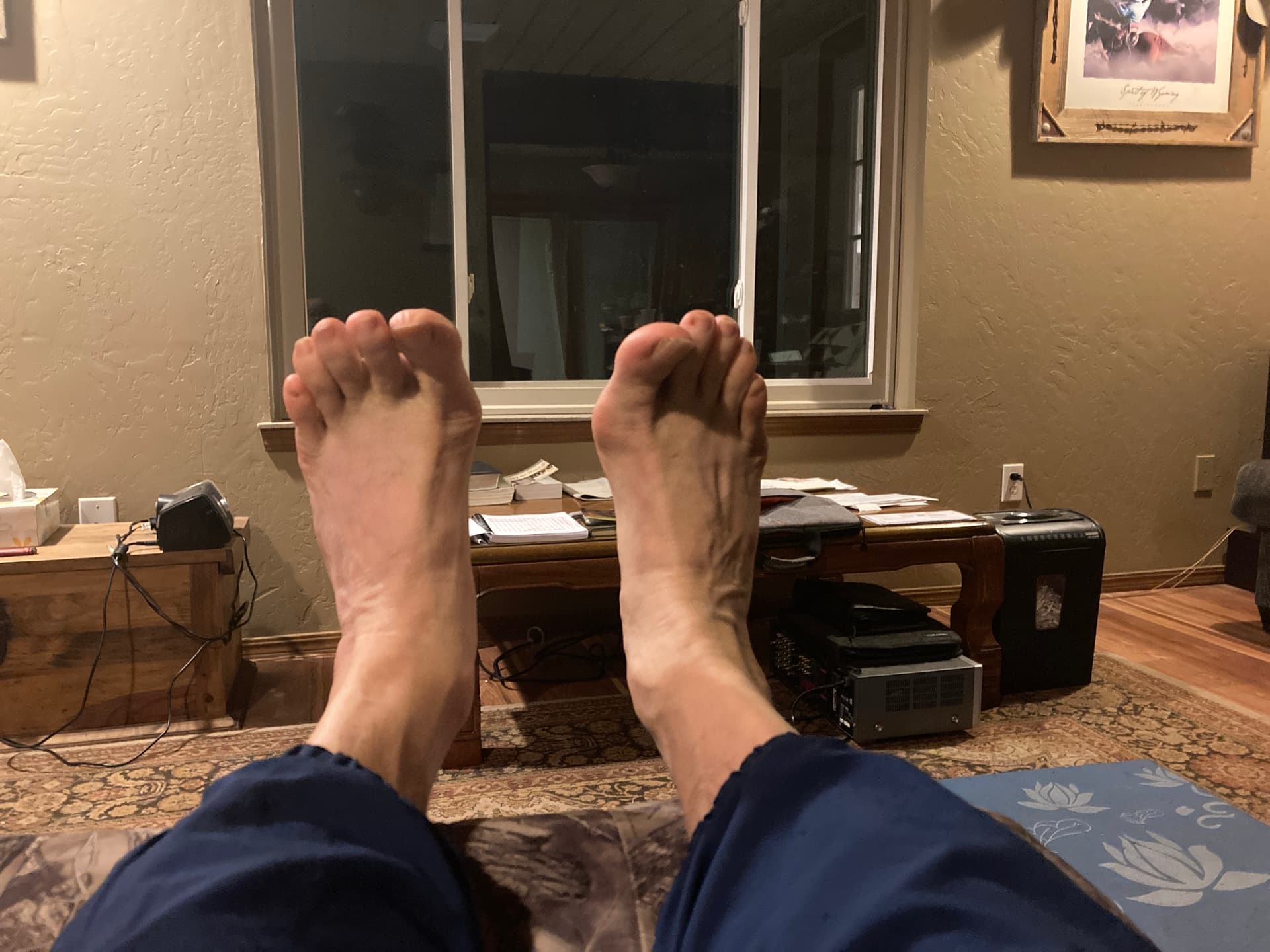
Look at those non-swelling up feet now! The big toe joints are now smaller than before…. It’s crazy good
6 Likes
WOOOOOT! YES!
God IS Good!
1 Like
I had a torn meniscus and found a prescription drug called diclofenac that has completely eliminated pain that I had for about 3 years. It also helped my wife’s neuropathy in her feet. Amazing stuff.
1 Like
Intermittent fasting is great for reducing swelling in the feet and general inflammation.
1 Like
Pretty cool…

3.2 trillion pixel camera! The telescope behind it is the Vera C. Rubin Observatory in Chile, equipped with the world’s biggest digital astronomy camera — a 3.2-gigapixel monster known as the LSST Camera.
What you’re seeing isn’t just a still photo — it’s the start of a 10-year, ultra-wide, ultra-high-definition time-lapse movie of the universe.
Every few nights, Rubin will re-image the sky, capturing galaxies, nebulae, stars, asteroids — and anything that moves or changes.
5 Likes
Pretty incredible shot. Makes the world seem very small.
1 Like
Consciousness 101. Am I right, @Jah26? Or perhaps, I think, therefore y’alls is a simulation?
2 Likes
the fact that the vast majority of those are galaxies is just mind boggling. Imagine how small the universe was just 100 years ago.
1 Like
Swami Sarvapriyananda is one of my favorite teachers. Brilliant. He’s based in NYC. Would love to visit and listen to his talks.
I sort of take for granted his view on this, as it’s pretty much universal in the Advaita tradition I’ve been immersed in for a while. There are scientists who think this way about consciousness and are working on theories based on this view.
3 Likes
I was listening to an astrophysicist the other day, I can’t remember his name, but he mentioned how fortunate we are to be on the outer edges of the Milky Way galaxy. If we were located closer to the center, the concentration of stars would increase light pollution to the point where we wouldn’t be able to see hardly any of the universe in the visible Spectrum. Not until they figured out radio waves, microwaves, Gamma rays or infrared would they be able to see what we are able to see. Just thought it was an interesting point.
2 Likes
but imagine how fantastic the night sky would look like. The constellations would be ridiculous.
1 Like